Back to Blog
Career GuideSpecializationsDay RatesNDT

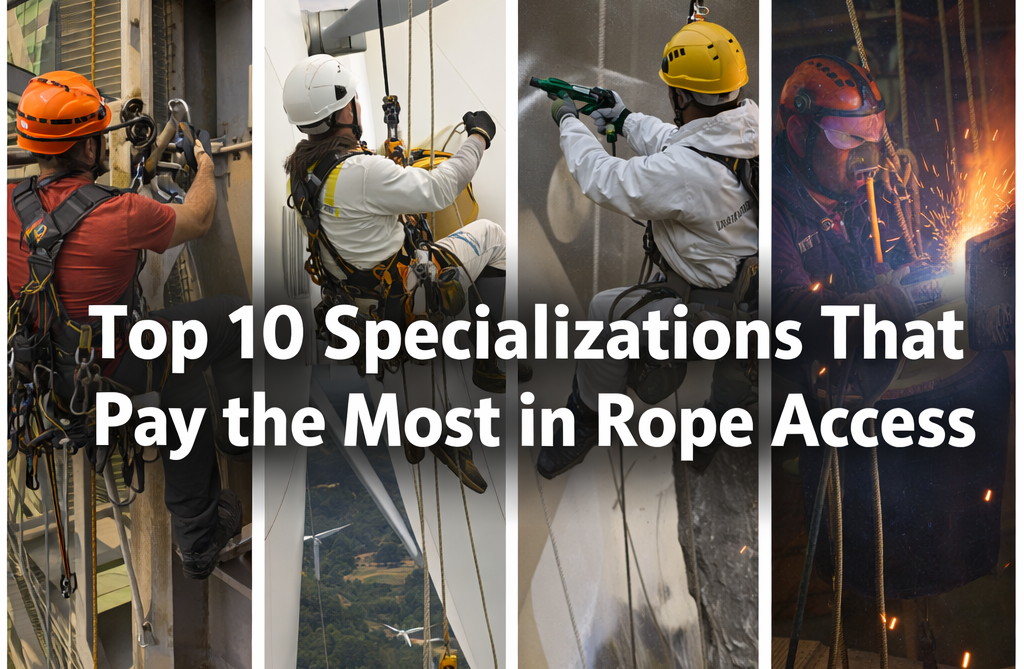
Top 10 Rope Access Specializations That Pay the Most

From offshore wind turbine blade repair to nuclear decommissioning — the highest-paying rope access specializations in 2025, with typical day rates and how to break into each.

By Rope Access Network
11 min read

Your IRATA card gets you in the door. Your specialization determines how much you earn once you're inside.

The rope access industry rewards technicians who bring trade skills beyond basic access work. A Level 2 with a high-demand specialization can out-earn a Level 3 doing general rigging. The difference? Often €100–200 per day.

This guide covers the 10 highest-paying rope access specializations in 2025, what each involves, typical day rates, and how to get into them.
1. Offshore Wind Turbine Blade Repair

Typical day rate: €350–550

Why it pays well: Offshore wind is booming across Europe, and turbine blades take a beating from weather, lightning, and erosion. Repairing them requires working at extreme heights (80–120m) in challenging offshore conditions, inside confined spaces at the blade tip, with specialist composite repair skills.

  • IRATA Level 2+ (Level 3 for lead technician roles)
  • GWO Basic Safety Training
  • Blade repair certification (manufacturers like Vestas, Siemens Gamesa offer training)
  • Offshore medical certificate
  • Composite materials knowledge

The opportunity: With Europe targeting 300GW+ of offshore wind by 2050, blade technicians will be in demand for decades. Early specialists are commanding premium rates.

Where to find work: North Sea (UK, Netherlands, Denmark, Germany), Baltic Sea, and increasingly the Atlantic coast.

2. NDT Inspection (Non-Destructive Testing)

Typical day rate: €350–600

Why it pays well: NDT inspectors are the diagnosticians of the industrial world. Combining rope access with NDT certifications (ultrasonic testing, magnetic particle inspection, radiography) creates a rare and valuable skill set. You're not just accessing structures — you're assessing their integrity.

  • IRATA Level 2+
  • PCN/CSWIP NDT certifications (UT, MT, PT, VT, TOFD, Phased Array)
  • Industry experience in target sector
  • Offshore certs for offshore work

The opportunity: Every oil platform, bridge, pipeline, and industrial structure needs regular inspection. NDT-qualified rope access technicians skip the scaffold queue entirely. Demand consistently outstrips supply.

Typical clients: Oil and gas operators, asset integrity companies, infrastructure owners.

3. Offshore Oil & Gas Platform Maintenance

Typical day rate: €300–500

Why it pays well: Working on offshore platforms means harsh conditions, rotation schedules (typically 2 weeks on, 2 weeks off), and strict safety requirements. The premium compensates for isolation, weather exposure, and the extensive certification stack required.

  • IRATA Level 1+ (Level 2/3 for better rates)
  • BOSIET (Basic Offshore Safety Induction and Emergency Training)
  • MIST (UK) or equivalent
  • Offshore medical certificate
  • Trade skills dramatically increase rates (painting, welding, NDT)

The opportunity: While oil and gas faces a long-term transition, platforms need ongoing maintenance and increasing decommissioning work. The North Sea alone has hundreds of platforms requiring constant attention.

Where to find work: Aberdeen (UK), Stavanger (Norway), Den Helder (Netherlands), Perth (Australia), Gulf of Mexico (USA).

4. Nuclear Decommissioning

Typical day rate: €350–550

Why it pays well: Nuclear work involves the highest safety standards in any industry. Rope access in nuclear environments requires specialist training, security clearance, and meticulous attention to radiation safety protocols. Few technicians have the qualifications and clearance, creating a supply-demand premium.

  • IRATA Level 2+
  • Nuclear site security clearance (BPSS minimum, SC or DV for some work)
  • Radiation awareness training
  • Nuclear industry specific inductions
  • Clean criminal record
  • Patience — security clearance takes weeks to months

The opportunity: The UK alone has 30+ nuclear sites in various stages of decommissioning, a programme spanning decades. Sellafield, Dounreay, and various Magnox sites provide steady work. France, Germany, and other European countries have similar programmes.

Where to find work: UK nuclear sites (primarily Cumbria, Scotland, Wales, Somerset), France (EDF sites), Germany.

5. Coded Welding at Height

Typical day rate: €350–550

Why it pays well: Coded welders are always in demand. Coded welders who can do it on ropes? Even more so. The combination eliminates the need for expensive scaffolding or platform access to welding locations, saving clients significant money while commanding premium rates for the technician.

  • IRATA Level 2+
  • Coded welding certifications (relevant to target industry — 6G pipe, structural steel, etc.)
  • Hot work permits and awareness
  • Trade-specific PPE
  • Strong practical welding skills (you're welding in a harness, not at a bench)

The opportunity: Structural repairs, pipeline work, platform modifications, industrial maintenance — welding at height is needed across virtually every sector. Skilled rope access welders rarely sit idle.

Typical clients: Construction companies, offshore operators, industrial maintenance firms, infrastructure projects.

6. Bridge and Infrastructure Inspection

Typical day rate: €280–450
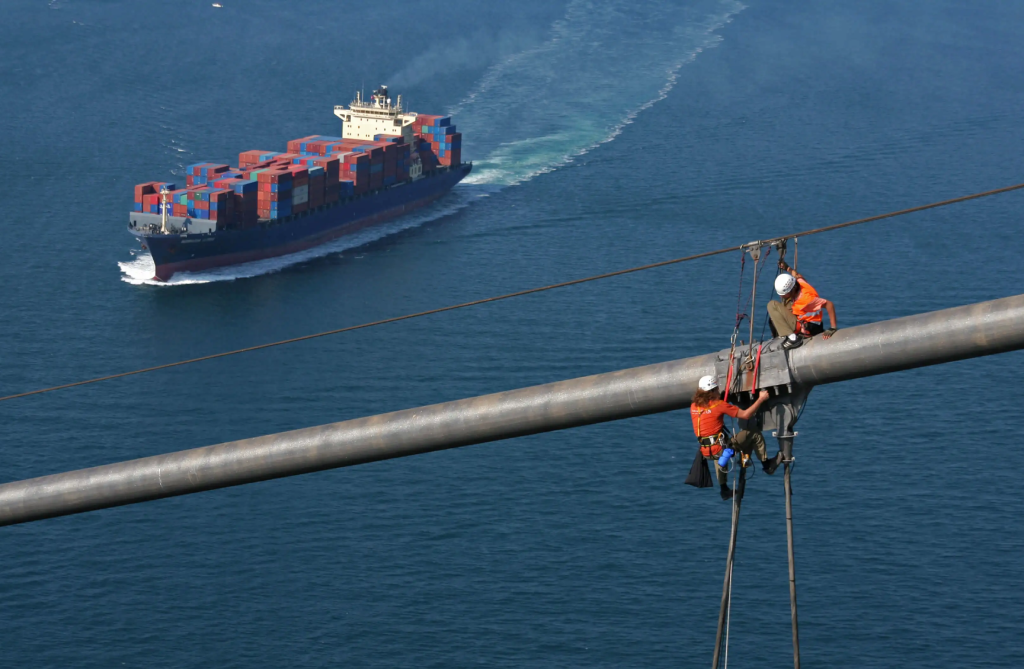
Why it pays well: Bridges, dams, tunnels, and other critical infrastructure need regular inspection — and much of it is in locations where scaffolding is impractical or prohibitively expensive. Rope access provides efficient access to bridge undersides, cable stays, pier columns, and dam faces.

  • IRATA Level 2+
  • Understanding of structural engineering basics
  • NDT certifications (major advantage)
  • Photography and reporting skills
  • Experience with specific structure types

The opportunity: Ageing infrastructure across Europe and North America needs increasing inspection attention. Government-funded inspection programmes provide steady, well-paid work. The US Infrastructure Investment and Jobs Act alone is driving massive inspection demand.

Where to find work: Government and municipal contracts, specialist inspection companies, engineering consultancies.

7. Telecommunications Tower Work

Typical day rate: €250–400

Why it pays well: 5G rollout and ongoing network maintenance keep telecom tower work in steady demand. Towers are tall (30–100m+), often in remote locations, and require technicians comfortable with exposed climbing and antenna handling. Rope access skills complement tower climbing certification.

  • IRATA certification (or tower-specific climbing certification)
  • Telecommunications awareness training
  • RF (radio frequency) safety awareness
  • Rigging skills for antenna installation
  • Working at height rescue capability
  • Driving licence (sites are often remote)

The opportunity: 5G network densification means more towers, more antennas, and more maintenance work across every European market. Rural connectivity programmes add further demand.

Typical clients: Vodafone, Deutsche Telekom, and other operators via subcontractors; tower companies like Cellnex and Vantage Towers.

8. High-Rise Façade Installation and Repair

Typical day rate: €250–400

Why it pays well: Modern high-rise buildings use complex façade systems — glass curtain walls, composite panels, ventilated rain-screens. Installing, replacing, and repairing these at height requires both technical building knowledge and rope access expertise. With cities building ever taller, demand keeps growing.

  • IRATA Level 2+
  • Façade systems knowledge (manufacturers often provide training)
  • Sealant and glazing skills
  • Understanding of building envelope principles
  • CSCS/VCA or local construction certification

The opportunity: Every major European city has ongoing high-rise construction and maintenance. London, Rotterdam, Frankfurt, Paris, Dubai — wherever tall buildings exist, façade specialists find work.

Where to find work: Specialist façade companies, construction contractors, building maintenance firms.

9. Industrial Painting and Protective Coatings

Typical day rate: €250–400

Why it pays well: Corrosion never sleeps, and protecting steel structures — bridges, tanks, offshore platforms, industrial plants — requires regular painting and coating work. Rope access painters who understand surface preparation, coating systems, and quality control earn more than general access technicians.

  • IRATA Level 1+
  • Painting and coating qualifications (NACE, SSPC, or equivalent)
  • Surface preparation knowledge (abrasive blasting, power tool cleaning)
  • Coating inspection skills (DFT measurement, adhesion testing)
  • Confined space certification (for tank work)

The opportunity: The global protective coatings market is worth billions, and rope access is increasingly the preferred method for applying coatings at height. Industrial maintenance shutdowns and offshore campaigns provide concentrated periods of high demand.

Where to find work: Industrial maintenance contractors, offshore painting companies, infrastructure maintenance programmes.

10. Confined Space Rescue and Standby

Typical day rate: €250–380

Why it pays well: Anywhere people work in confined spaces (tanks, vessels, tunnels, shafts), rescue-trained standby personnel are legally required. Rope access technicians with confined space rescue training can fill this role, combining vertical rescue skills with confined space expertise.

  • IRATA Level 2+
  • Confined space entry and rescue certification
  • First aid (advanced level preferred)
  • Gas detection and atmospheric monitoring knowledge
  • Rescue equipment proficiency

The opportunity: Refineries, chemical plants, wastewater facilities, and marine vessels all require confined space standby. It's steady, relatively low-physical-demand work compared to active rope access, and pays well for the standby element.

Where to find work: Industrial maintenance contracts, petrochemical shutdowns, marine and shipyard work.

How to Maximise Your Earning Potential

Pick Your Specialization Strategically

  • Interest you genuinely (you'll invest years in them)
  • Have strong demand in your region
  • Command premium rates
  • Have clear training pathways

Invest in Training

Trade certifications cost money — sometimes thousands. But the ROI is clear. A €3,000 NDT course that adds €100/day to your rate pays for itself in 30 working days.

Combine Specializations

  • NDT + rope access = inspection specialist
  • Welding + rope access = structural repair specialist
  • GWO + blade repair + rope access = wind energy specialist

Each additional relevant certification widens your market and strengthens your negotiating position.

Build Your Profile

Make your specializations visible. On your Rope Access Network profile, list every certification and skill. When employers search for "NDT rope access" or "offshore wind blade repair," you want to appear in those results.

Track the Market

Sectors shift. Oil and gas may slow, but wind energy is accelerating. Nuclear decommissioning is a multi-decade programme. Stay aware of industry trends and position yourself where demand is growing, not shrinking.

The Bottom Line

Your IRATA certification is the platform. Your specialization is the accelerator. The technicians earning €400–600/day aren't just experienced — they've invested in specific, high-value skills that solve expensive problems for their clients.

Whether you're a new Level 1 thinking about your first trade certification or an experienced technician looking to pivot into a higher-paying sector, the message is the same: specialize, certify, and make yourself findable.

Create your profile on Rope Access Network and showcase your specializations. The right employer is searching for exactly your skill set — make sure they can find you.


Want to know which specialization suits you best? We've been there. Reach out for honest advice based on your background and goals.

Ready to Start Your Rope Access Career?

Join thousands of certified technicians on Rope Access Network. Create your professional profile, showcase your certifications, and connect with leading companies in the industry.

Share this article:
Updated 2/12/2026