
Knives for Rope Access Technicians: Life-Saving Tool or Platform Liability?
Oil platforms ban them. Ships confiscate them. But a knife can be the difference between life and death when a rope access technician gets entangled. So who's actually right?
Ask a rope access technician about knives and you'll get a strong opinion. Ask a platform HSE manager and you'll get a different one. Both are defensible. That's the problem.
Why a knife can save your life
Rope access is a rope-dependent system. In an entanglement — a line wrapped around a limb, a jammed descender, a falling load — a cutting tool is sometimes the only exit. It's not theoretical. IRATA's own rescue guidance acknowledges cutting as a legitimate last-resort option.
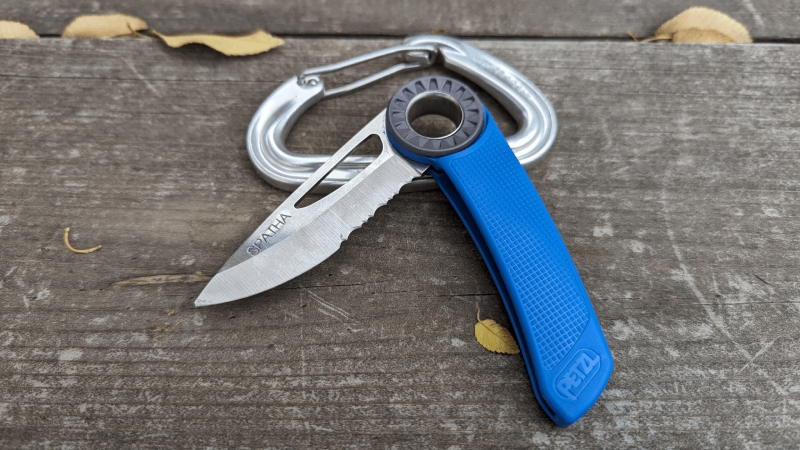
The knife being discussed here isn't a pocket knife. It's a purpose-built rescue tool — hooked blade, recessed, one-handed, brightly coloured. A Petzl Spatha doesn't look like a weapon. It's functionally useless for anything except cutting cordage under load.
Why platforms ban them
The ban isn't irrational. Offshore platforms operate under strict HSE and PFEER frameworks, with large isolated workforces under pressure. The history of incidents in enclosed offshore environments has shaped operator caution, and the legal exposure is enormous. A blanket "no knives" policy is easier to enforce than a nuanced one.
The problem is that blanket policies don't distinguish between a scaffold inspector and a rope access technician whose entire working system is made of ropes.
How technicians actually handle it
In practice, most experienced technicians either declare their rescue knife upfront and negotiate with the OIM, or write it into the Method Statement and Risk Assessment before mobilisation. If the client signs off the MSRA, they've implicitly approved the equipment.
Some carry it anyway. That's understandable but not a good legal position.
What should change
Purpose-built rescue knives should be classified separately from general knives in platform safety policies. If it's in your signed MSRA, the conversation at the gangway shouldn't need to happen. And IRATA could be more vocal — Level 3 supervisors are responsible for rescue planning. Removing a critical rescue tool without a viable alternative creates a real gap.
The short answer
Both sides have a point. The failure is systemic: a blunt rule applied to a situation that requires nuance. Until that changes — write it into your MSRA, declare it, explain what it is.
Have experience with knife policies on a specific platform? Drop it in the comments.
Ready to Start Your Rope Access Career?
Join thousands of certified technicians on Rope Access Network. Create your professional profile, showcase your certifications, and connect with leading companies in the industry.